At a glance
Ultra Sur in 30 seconds
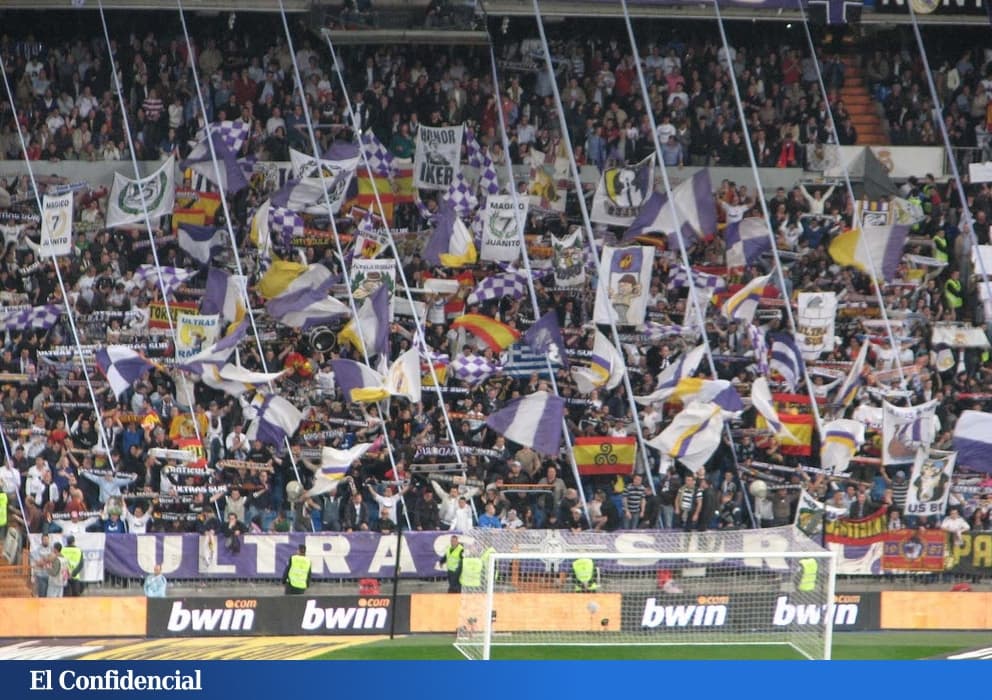
Ultras Sur is Real Madrid's historic ultra group. It was born in 1980 as a core of the youth peña Las Banderas in the Bernabéu's Fondo Sur, according to La Soga, and since the late 1980s has maintained a twinning with Brigadas Blanquiazules of Espanyol. In December 2013 the club reorganised the Fondo Sur animation stand and in 2014 it banned the group from entering. In 2019 the State Commission against Violence included it in its list of radical groups, and in 2024 the press described former members integrated into the animation stand.
- Club
- Real Madrid
- City
- Madrid
- Stadium
- Santiago Bernabéu
- Stand
- Fondo Sur of the Santiago Bernabéu · historical location
- Founded
- 1980
- Relationship with the club
- Group banned from the Bernabéu (2014)
Documented history
Ultras Sur: Real Madrid's historic ultra group
Ultras Sur emerged in 1980 within the youth peña Las Banderas, which already occupied the Bernabéu's Fondo Sur. La Soga counts it among the first groups before the 1982 World Cup, notes the presence of young heavies in its early years and recalls that in 1987 it appeared live, alongside Boixos Nois and Supporters Gol Sur, on TVE's programme «En Familia».
Late 1980s: the twinning with Brigadas Blanquiazules
La Soga places the twinning between Ultras Sur and Brigadas Blanquiazules, of Espanyol, in the late 1980s, defining it as «not only football-related but also political». RTVE and Europa Press were still describing that «very good relationship» in 2014, along with links to Italian groups such as those of Hellas Verona and the Irriducibili of Lazio. In the same report, Frente Atlético appeared as a group «strongly at odds» with Ultras Sur.
See this section's source ↗2013–2014: reorganisation of the end stand and the ban
On 26 December 2013, Real Madrid announced the complete reorganisation of the Fondo Sur animation stand and opened a period for members to apply for a place with personal, non-transferable season tickets, according to El Confidencial. In December 2014, RTVE reported that the club had banned Ultras Sur from entering and that only some of its members attended the stadium in a personal capacity. The Europa Press report added that the new controlled stand, then called Minuto 93, occupied the fourth tier of the Fondo Sur.
See this section's source ↗Grada Fans, the animation stand that followed
Grada Fans RMCF was born in 2014 and is organised through peñas and associations recognised by the club, which takes part in its management through a Stand Committee. Its rules include rejecting violence and discriminatory messages and renouncing the political use of the stand. It is an organisation distinct from Ultras Sur, although it occupies the same end of the stadium.
See this section's source ↗2015: hostility from Bukaneros
In January 2015, a LaLiga complaints report recorded that the group Bukaneros, of Rayo Vallecano, had chanted «Hay que matar al Ultra Sur» (“Ultra Sur must be killed”) during a match. It is one of the documented episodes of the enmity between the two groups.
See this section's source ↗2019–2024: official lists and former members in the stand
In March 2019, the State Commission against Violence, Racism, Xenophobia and Intolerance in Sport included Ultras Sur in its provisional list of radical or violent groups, as announced by the RFEF. In February 2023, El Independiente cited it among the fifteen groups that the Anti-Violence Commission considered dangerous and violent. In February 2024, after a derby in which the Fondo Sur tifo was torn, 3Cat, citing Relevo, described former members of the group as «recycled» into the animation stand and in conflict with other sectors of the Grada Fans.
See this section's source ↗Key dates
Timeline of Ultra Sur
1980 · Origin in Las Banderas
Born as a segment of the youth peña Las Banderas in the Fondo Sur at Chamartín, according to La Soga.
1987 · On television
Appears live on TVE's programme «En Familia» alongside Boixos Nois and Supporters Gol Sur.
2013 · Reorganisation of the end stand
On 26 December, Real Madrid announces the complete reorganisation of the Fondo Sur animation stand.
2014 · Club ban
RTVE reports that Real Madrid has banned the group from entering; Grada Fans is born.
2019 · List of radical groups
In March the State Commission includes it in its provisional list of radical or violent groups.
2024 · Former members in the stand
3Cat, citing Relevo, describes former members as «recycled» in the animation stand.
Ideology and identity · Ultra Sur
The sources describe Ultras Sur as a far-right group: the degree dissertation by Baltasar Barceló Sánchez (Miguel Hernández University, 2023) classifies it that way, and 3Cat presented it in February 2024 as a radical far-right group founded in 1980. La Soga defines its twinning with Brigadas Blanquiazules, from the late 1980s, as «not only football-related but also political». These are external descriptions of the group, not of Real Madrid's supporters; no public self-definition by the collective is on record.
Source of this description ↗Frequently asked questions
Getting to know Ultra Sur
When did Ultras Sur begin?
In 1980, as a core of the youth peña Las Banderas in the Bernabéu's Fondo Sur, according to La Soga.
What are Real Madrid's ultras called?
The historic group is Ultras Sur, born in 1980. Since 2014, the animation of the Fondo Sur has been organised by Grada Fans, a distinct entity in which the club takes part.
What is Ultra Sur's ideology?
Far-right, according to a degree dissertation from Miguel Hernández University (2023) and 3Cat (2024). These are external descriptions; no self-definition by the group is on record.
Where did the Ultras Sur stand at the Bernabéu?
In the Fondo Sur, where the youth peña Las Banderas already stood in 1980, according to La Soga.
Who are Ultra Sur's enemies?
Frente Atlético, which RTVE described in 2014 as «strongly at odds» with Ultras Sur, and Bukaneros, who chanted against the group in 2015, according to LaLiga.
Who is Ultras Sur twinned with?
With Brigadas Blanquiazules, of Espanyol, since the late 1980s, according to La Soga. In 2014 RTVE also cited relations with groups of Hellas Verona and Lazio.
Does reorganising the Fondo Sur mean dissolving Ultra Sur?
No. The 2013 reorganisation affected the management of an area of the stadium and its access conditions; in 2014 the club banned the group from entering, but that is not equivalent to a legal dissolution.
Do the Ultras Sur still exist?
The club banned the group in 2014. In February 2024 the press described former members integrated into the animation stand; no activity by the group under its own name in the stadium is on record.
Is Ultras Sur on the list of radical groups?
Yes. The State Commission against Violence included it in its provisional list in March 2019, according to the RFEF.
Sources
The documents behind this history
Each source keeps its date and scope. Titles appear in their original language. An insider account, an announcement and an official decision document different facts.
- Historia del movimiento ultra en España: los orígenes (1975–1988) ↗
La Soga · Pentayus · 9 March 2015
Origin in Las Banderas, presence of heavies, TVE appearance and twinning with Brigadas Blanquiazules.
- La nueva Grada de Animación del Bernabéu será controlada por el club ↗
El Confidencial · 26 December 2013
Announcement of the reorganisation and conditions of membership.
- Barça y Real Madrid, al frente de la tolerancia cero con los ultras ↗
RTVE · Rubén Heras · 1 December 2014
The group's 2014 ban and the attendance of some members in a personal capacity.
- Así es el mapa de los ultras del fútbol español ↗
RTVE · Europa Press · 1 December 2014
Minuto 93 stand and relations with Brigadas Blanquiazules, Italian groups and Frente Atlético.
- Presentación y funcionamiento de Grada Fans RMCF ↗
FansRMCF
Birth in 2014, Stand Committee and the commitments of its members.
- Nota informativa de denuncias ↗
LaLiga · 20 January 2015
Bukaneros chant against Ultras Sur.
- La Comisión Estatal contra la Violencia en el Deporte incluye a Ultras Sur y Boixos Nois como grupos radicales ↗
RFEF · 19 March 2019
Inclusion in the provisional list of radical groups.
- La Policía controla a 10.000 ultras en el fútbol ↗
El Independiente · Carlos Frías · 18 February 2023
Inclusion among the fifteen groups considered dangerous by the Anti-Violence Commission.
- La evolución de la violencia ultra en el fútbol español ↗
Baltasar Barceló Sánchez · Miguel Hernández University (degree dissertation) · 2023
The author's ideological classification.
- El tifo del Bernabéu no es va trencar: creix la violència entre Ultra Sur reciclats i la Grada Fans ↗
3Cat · Esport3 · 6 February 2024
Ideological description, former members in the animation stand and tension with Grada Fans. Article in Catalan.
Documentary review: 18 October 2026. English edition: 21 October 2026. Editorial team: Mundo Ultras.
Keep reading