
At a glance
Juventudes Verdiblancas in 30 seconds
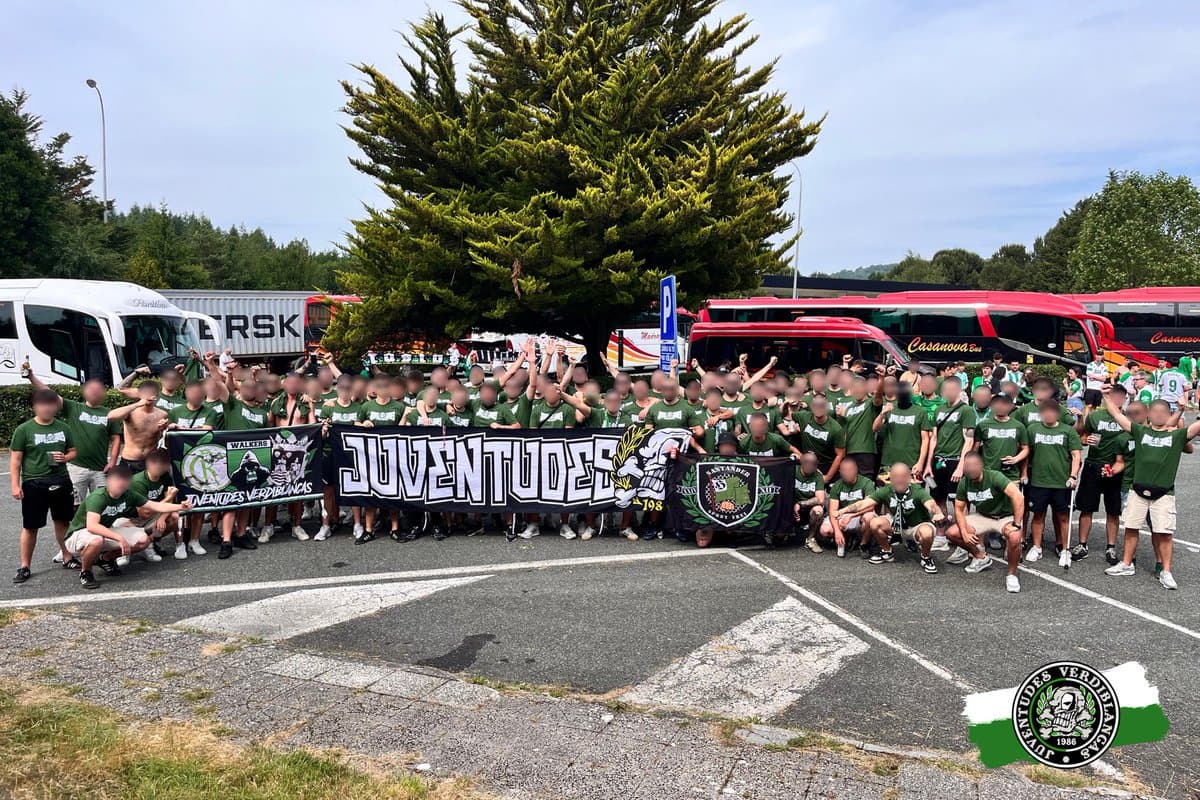
Juventudes Verdiblancas is Racing de Santander's supporters' group, born in the 1986–1987 season among students of the Salesianos school on the old stand known as La Gradona de los Malditos. Since 1988 it has been based in the Fondo Norte of the new Sardinero, and in 2012 the club presented it as the largest of its almost fifty peñas. In September 2026, the State Commission against Violence cited its rivalry with Iraultza, of Alavés, to declare a Racing–Alavés match high-risk, and the group denied in a statement that it had agreed a fight.
- Club
- Racing de Santander
- City
- Santander
- Stadium
- El Sardinero
- Stand
- Fondo Norte of El Sardinero (since 1988)
- Founded
- 1986
- Situation
- Statement by the group after the high-risk Racing–Alavés match (September 2026)
Documented history
Juventudes Verdiblancas: Racing's supporters' group since 1986
The history published by Juventudes Verdiblancas places its birth in the 1986–1987 season, among students of the Salesianos school in Santander, at the old Campos de Sport of El Sardinero. Its founders were between sixteen and their early twenties, and the name came from that youth and from Racing's green and white colours.
La Gradona de los Malditos and the name
According to the group's own account, the peña began on La Gradona de los Malditos, the stand behind the goal closest to Cabo Mayor, popularly known by that name since 1925 and occupied by the youngest fans because it had the cheapest season ticket. In the current stadium, La Gradona is the name of a sector: in August 2025, Racing included it among the areas whose season-ticket capacity was filled for the 2025/26 season.
See this section's source ↗1988: the move to the new Sardinero
With the opening of the new Campos de Sport in 1988, the group settled in the Fondo Norte. Its account links that move to the growth of the peña among fans from Santander and other towns in Cantabria.
See this section's source ↗2012: a clubhouse and Racing's largest peña
On 24 March 2012 Racing reported the opening of a clubhouse of the peña near General Dávila, attended by club representatives and players such as Munitis, Toño, Álvaro and Jairo. The venue was meant for meeting before matches at El Sardinero and for watching away games outside Cantabria on television. The club then described it as the largest of the almost fifty peñas that brought together Racing supporters.
See this section's source ↗2020: taking part in Racing Solidario
On 21 December 2020, Racing included Juventudes Verdiblancas among the organisations contributing to Racing Solidario, together with the peña Cachopo and collaborating companies. The campaign was then approaching 3,000 kilos of food across all contributions, to be distributed through organisations such as Cocina Económica, Banco de Alimentos and Cruz Roja.
See this section's source ↗2025–2026: arrests, high risk and a denial
In November 2025, the National Police arrested sixteen people over a clash on 28 September in a hospitality area of Santander between members of Juventudes Verdiblancas and Asturian radicals, some of them from Ultra Boys, of Sporting de Gijón, according to Cadena SER and EFE. In September 2026, the State Commission against Violence declared the Racing–Alavés match high-risk because of the rivalry between Juventudes Verdiblancas and Iraultza, and the police reported having foiled an agreed fight. On 28 September, the peña denied in a statement that its members had arranged any confrontation and offered its legal services to those affected, according to El Diario Montañés. These are arrests and conflicting accounts, not court rulings.
See this section's source ↗Key dates
Timeline of Juventudes Verdiblancas
1986 · Born at the Salesianos
A group of students forms the peña in the 1986–1987 season, on La Gradona de los Malditos.
1988 · Fondo Norte
With the new Campos de Sport, the peña settles in the Fondo Norte.
2012 · New clubhouse
Racing attends the opening of its clubhouse and presents it as its largest peña.
2020 · Racing Solidario
It takes part in the club's charity campaign alongside the peña Cachopo and several companies.
2025 · Arrests in Santander
The National Police arrest sixteen people over a clash on 28 September with Asturian radicals.
2026 · High risk against Alavés
The match is declared high-risk because of the rivalry with Iraultza; the group denies having agreed a fight.
Frequently asked questions
Getting to know Juventudes Verdiblancas
How did Juventudes Verdiblancas begin?
Among students of the Salesianos school in Santander in the 1986–1987 season, on La Gradona de los Malditos at the old Campos de Sport, according to the peña's own account.
What are Racing de Santander's ultras called?
Juventudes Verdiblancas is Racing's supporters' group, born in 1986–1987; El Diario Montañés referred to it as such in September 2026.
What does the name Juventudes Verdiblancas mean?
It combines the youth of its founders, from sixteen to their early twenties, with Racing's green and white colours, according to the group itself.
Where do Juventudes Verdiblancas stand at El Sardinero?
In the Fondo Norte, where they settled when the new stadium opened in 1988, according to the group's account.
What is Juventudes Verdiblancas's ideology?
No cited source attributes a political ideology to it: neither the group's account, nor Racing's news, nor the 2025 and 2026 press, which describe it as a supporters' group. That absence is not the same as a declared position.
Which groups is it rivals with?
With Iraultza, of Alavés: the State Commission against Violence cited that rivalry in September 2026 to declare the Racing–Alavés match high-risk. In 2025 there was also a clash in Santander with members of Ultra Boys, of Sporting.
What activities has it carried out away from the stand?
Racing documented the opening of its clubhouse in March 2012 and its participation in the Racing Solidario campaign in December 2020.
Is Juventudes Verdiblancas still active?
Yes. On 28 September 2026 it published a statement denying that it had agreed a fight with Alavés fans, according to El Diario Montañés.
Sources
The documents behind this history
Each source keeps its date and scope. Titles appear in their original language. An insider account, an announcement and an official decision document different facts.
- Historia de Juventudes Verdiblancas ↗
Juventudes Verdiblancas · the group's own account
School origin in 1986–1987, the name, La Gradona de los Malditos and the move to the Fondo Norte in 1988.
- El Racing, en la inauguración de la nueva sede de Juventudes ↗
Real Racing Club · 24 March 2012
Opening of the clubhouse and description as the club's largest peña.
- Las peñas Cachopo y Juventudes Verdiblancas se suman a Racing Solidario ↗
Real Racing Club · 21 December 2020
Participation in the 2020/21 campaign.
- Entradas para el Racing–Castellón ↗
Real Racing Club · 11 August 2025
La Gradona as a stadium sector in the 2025/26 season.
- La Policía detiene a 16 ultras de fútbol por un enfrentamiento ocurrido en septiembre en Santander ↗
Cadena SER · EFE · 11 November 2025
Arrests over the clash of 28 September 2025 with Asturian radicals; not convictions.
- La Policía frustra una pelea pactada entre ultras del Racing y el Alavés ↗
El Confidencial · EFE · 14 September 2026
High-risk declaration because of the rivalry with Iraultza and the police account.
- Juventudes Verdiblancas desmiente que hubiera un enfrentamiento pactado con hinchas del Alavés ↗
El Diario Montañés · Aser Falagán · 28 September 2026
The group's statement in September 2026.
Documentary review: 18 October 2026. English edition: 21 October 2026. Editorial team: Mundo Ultras.
Keep reading